
Why Pre-Op Sanitation Matters
Pre-operational sanitation is one of the most visible verification points in a USDA-inspected facility. Inspectors evaluate whether establishments consistently prevent insanitary conditions before production begins.
What Inspectors Are Evaluating
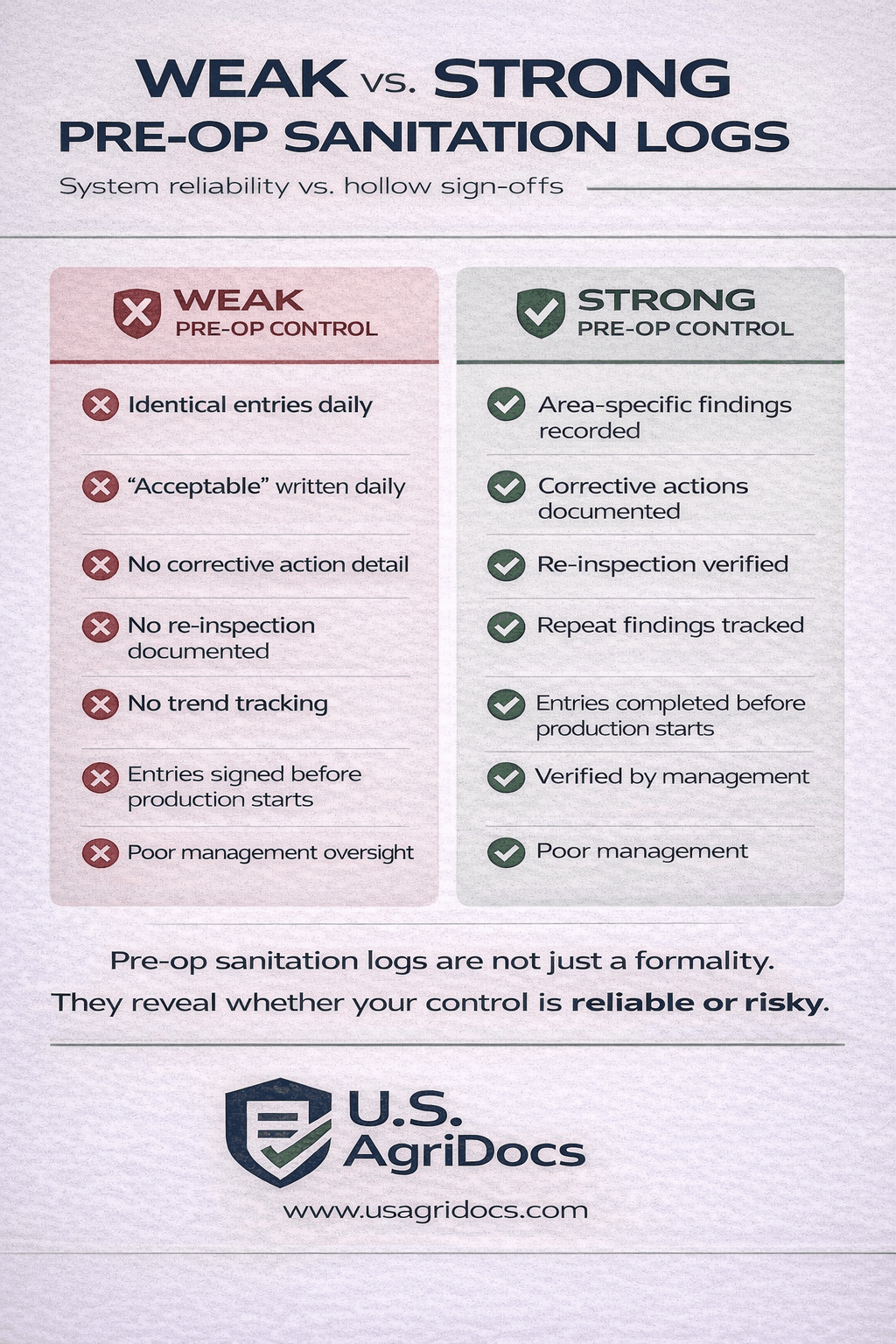
When inspectors review pre-op sanitation logs, they are assessing whether the sanitation system is executed consistently and reliably.
Inspector Focus Areas
- Completeness — All equipment and areas covered with no blank sections.
- Specificity — Clear findings rather than vague statements.
- Timeliness — Inspections completed before production begins.
- Corrective Actions — Deficiencies documented and corrected.
- Re-Inspection — Documentation that issues were verified after correction.
- Trend Awareness — Repeated sanitation failures identified and addressed.
- SSOP Alignment — Pre-op checks match written sanitation procedures.
- Management Verification — Supervisors review sanitation logs.
Common Pre-Op Log Mistakes
- Identical entries repeated daily
- Missing corrective action details
- Late timestamps
- No documented re-inspection
- Equipment coverage gaps
- No trend tracking
How U.S. AgriDocs Improves Sanitation Control
U.S. AgriDocs enforces complete sanitation entries, automatically timestamps inspections, tracks repeat sanitation findings, and produces organized inspection-ready reports.
SSOPs Made Simple: Your Plant's First Line of Food Safety Defense
The Bottom Line
Pre-op sanitation logs are not just a formality. They reveal whether your control is reliable or risky. Plants that treat pre-op as a true verification step — not a checkbox — build stronger compliance systems and navigate inspections with confidence.